

Service Obligations
Recipients of this program are required to complete an employment obligation at an eligible practice site.
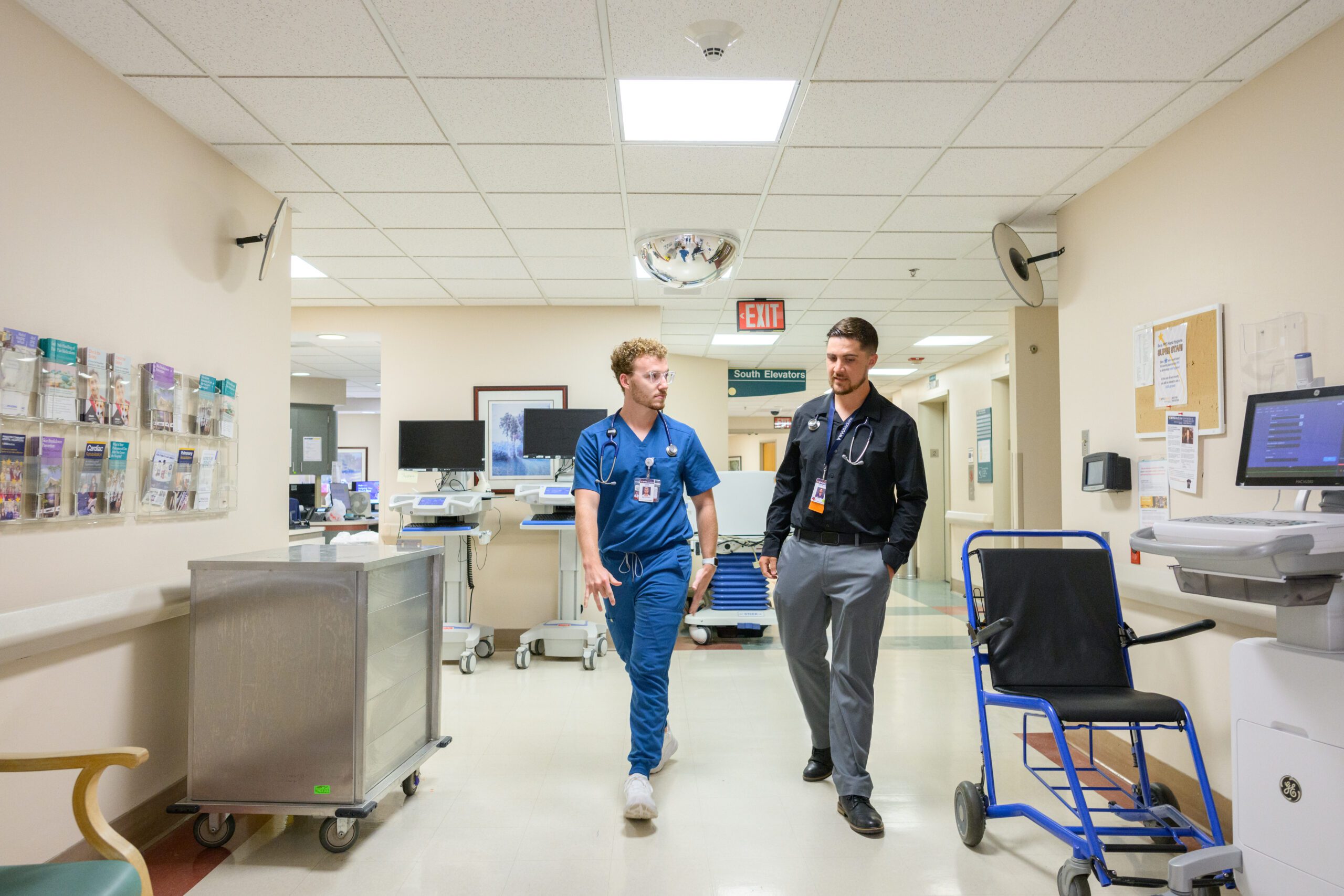
The service obligation is either two years of full-time (a minimum of 40 hours per week) or four years of half-time (a minimum of 20 hours per week) employment at an eligible practice site. All service sites must be within West Virginia. Participants are responsible for securing a practice site within six months of completing their training. Ineligible service obligation sites include emergency rooms (except for Emergency Medicine trained physicians), hospital inpatient positions, and walk-in clinics.
The penalty for not fulfilling the service obligation for awards prior to January 1, 2026, is repayment of the award with 15 percent interest. Interest begins accruing from the date of default if training or the service obligation is not completed. For awards made January 1, 2026, and after, the award will be cancelled if the service obligation is not fulfilled.
To fulfill the Health Sciences Service Program agreement, a participant must complete the service obligation in an approved underserved area in West Virginia while practicing in one of the approved eligible disciplines. The participant must demonstrate federal student loan debt equal to or exceeding their award amount prior to disbursement of their award payments.
The award participants must begin practicing six months after graduation. Any participant may request to pursue additional postgraduate training or fellowship. The Senior Director for Health Sciences shall use his or her discretion to approve such requests. Participants must complete residency and/or fellowship training in West Virginia unless otherwise approved by the Senior Director of Health Sciences. The service obligation begins within six months of the participant’s completion of training.
To fulfill their service obligation agreement, participants may practice full time for two years or part time for four years. Full time is defined as at least thirty-seven and a half hours per week, and part time is defined as at least twenty hours per week. Participants may not work less than twenty hours per week.
Each primary care discipline may have specific criteria to meet the service obligation requirements. Those requirements are outlined below by discipline:
- Physician (MD/DO)
- Emergency Medicine: medical student participants only who have completed an emergency medicine residency shall satisfy his or her obligation to practice emergency medicine in West Virginia.
- Primary Care disciplines: medical student participants must begin practicing and completing the service obligation within six months of completing a qualifying primary care or residency program in West Virginia.
Nurse practitioner – must begin practicing and completing the service obligation within six months of graduation.
- Nurse educator – teaching at a school of nursing in West Virginia; must begin practicing and completing the service obligation within six months of graduation.
- Nurse midwife – must begin practicing and completing the service obligation within six months of graduation.
- Physician Assistant – must begin practicing and completing the service obligation within six months of graduation.
- Dentist – must begin practicing and completing the service obligation within six months of graduation.
- Pharmacists must begin practicing and completing the service obligation within six months of graduation.
- Physical therapist – must begin practicing and completing the service obligation within six months of graduation.
- Doctoral clinical psychologists must begin practicing and completing the service obligation within six months of completing their one-year internship, which is required for attaining licensure as a doctoral clinical psychologist.
- Licensed independent clinical social worker – must begin practicing and completing the service obligation within six months of completing his or her two-year post-graduate clinical field placement required for attaining licensure as a licensed independent clinical social worker.
Site eligibility is determined by using Health Professional Shortage Areas (HPSAs) as designated by the Health Resources and Services Administration (HRSA). All Health Professional Shortage Area (HPSA) designations and site eligibility are determined by criteria set forth by the Health Resources and Services Administration (HRSA). The Health Sciences Service Program utilizes the information from HRSA to determine site eligibility by looking at Facility-based HPSAs, Geographical HPSAs, and population HPSAs.
To be eligible for the Health Science Service Program, the practice site must either be one of the approved HPSA facilities or be in an HPSA county designated Geographic or a Population HPSA. Sites designated as Federally Qualified Health Centers (FQHC), Correctional Facilities (CF), Free Clinics (FR), or Rural Health Clinics (RHC) should be eligible for the Health Sciences Service Program service obligation. To see a complete list of eligible sites that meet the above criteria, please use the HPSA Find Tool.
Health Sciences Service Program Eligibility Shortage maps are available and updated annually.
In the Health Sciences Service Program Eligibility Shortage Maps (attached below), each West Virginia
county is coded by one of the following:
- Geographic HPSAs have a shortage of services for the entire population within an established geographic area. The majority of sites in these counties should be approved for the Health Sciences Service Program.
- Population HPSAs have a shortage of services for a specific population subset within an established geographic area. WV Counties have a Low-Income designation. The sites located within these counties will need to be verified prior to approval. Information should be submitted to the Program Administrator for review prior to starting service towards obligation. Once verified, further documentation may be required to be submitted by the site administrator or supervisor to the Program Administrator.
- Not a HPSA: For sites located in counties designated as Not a HPSA County and not listed as an FQHC, FC, RHC, or CF on HRSA.gov, documentation must be submitted showing that the majority of patients served meet the facility designation criteria above. The site administrator or supervisor should submit the documentation to the Program Administrator.
Participants are responsible for securing their own practice site. At the time a participant is ready to start his or her practice or teaching, he or she may request that additional areas be considered as underserved by the Senior Director for Health Sciences. Among the criteria for consideration of such additional areas are factors such as a population shift, which may create an additional underserved area or a location where a physician or other primary health care professional will retire or leave the area for other reasons.
For sites that may be new practices and do not have sufficient patient data, participants can ask for a deferment for six calendar months to gather patient data and submit it at the end of the deferment period. If sufficient data have been collected to show that the majority of the patient population meets the criteria, an HSSP Service Site Waiver can be submitted for review of the site.